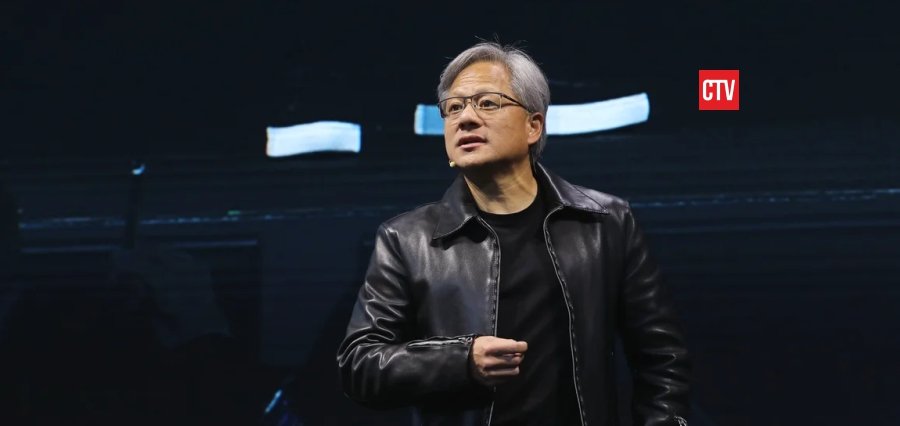
The NVIDIA co-founder returns as CEO following a unanimous board decision, bringing renewed leadership to the technology giant as artificial intelligence reshapes global industries.
The global technology industry is witnessing a significant leadership development as Jensen Huang returns to the position of President and Chief Executive Officer of NVIDIA, just 11 days after stepping down from the role. The company’s Board of Directors unanimously approved his reinstatement on November 23, 2026, restoring the leadership of the co-founder who transformed NVIDIA into one of the most influential companies in artificial intelligence, semiconductor technology, and accelerated computing.
His return marks an important moment for NVIDIA at a time when artificial intelligence is becoming central to global economic growth, enterprise transformation, and technological competition. With businesses investing heavily in advanced computing infrastructure and governments recognizing AI as a strategic priority, Huang’s leadership is expected to play an important role in determining how NVIDIA approaches its next phase of innovation.
The board’s decision followed discussions with Huang and an assessment of his ability to lead the organization. NVIDIA also confirmed that it had received input from senior levels of the United States government, which informed its assessment that his reinstatement presented no national security risk. While the decision restores an established leadership structure, the company has confirmed that its independent investigation into the circumstances surrounding his departure will continue.
For NVIDIA, the development brings back a leader whose long-term vision has been closely connected to the company’s evolution and its growing influence across the global technology ecosystem.
A Return That Marks a New Chapter for NVIDIA
Huang’s departure on November 12, 2026, created considerable uncertainty around the leadership of the semiconductor giant. Following his resignation, NVIDIA appointed its Executive Vice President and Chief Financial Officer, Colette Kress, as interim CEO while the board began considering its leadership options.
However, the transition proved short-lived. As discussions surrounding his possible return gained momentum, employees, investors, technology leaders, and business partners expressed support for restoring Huang to the position. The board ultimately reversed its earlier decision and reinstated him with immediate effect.
Board Chair Harvey C. Jones stated that the directors believed Huang was the right person to lead NVIDIA and that his return served the interests of shareholders, employees, partners, and customers. Huang, in response, expressed gratitude for the confidence placed in him and described his return as an opportunity to lead one of the world’s most consequential technology companies at the beginning of a new industrial revolution.
The decision also highlights the importance of leadership continuity for a company operating at the center of an increasingly competitive global AI market. NVIDIA’s technology roadmap, relationships with major customers, and extensive developer ecosystem have developed under Huang’s leadership, making his return particularly significant for the organization.
From Graphics Processing to Artificial Intelligence Leadership
Huang’s journey with NVIDIA began in 1993, when he co-founded the company with Chris Malachowsky and Curtis Priem. Their initial ambition was to advance computer graphics and develop technologies capable of improving visual computing experiences.
One of NVIDIA’s defining achievements came in 1999 with the introduction of the GPU. This innovation transformed computer graphics, strengthened the gaming industry, and eventually opened opportunities across scientific computing, data processing, and artificial intelligence.
Huang recognized that the processing capabilities developed for graphics could have applications far beyond gaming. This understanding influenced NVIDIA’s long-term investment in parallel computing, creating a foundation for technologies that would later become essential to modern AI development.
Another important milestone arrived in 2006 with CUDA, NVIDIA’s parallel computing platform. It enabled developers and researchers to use GPUs for a broader range of computational tasks, supporting advancements in deep learning, scientific research, and complex simulations.
These investments positioned NVIDIA advantageously when artificial intelligence began experiencing rapid development. As researchers and businesses required increasingly powerful computing systems to train and operate sophisticated AI models, NVIDIA’s hardware and software ecosystem became a critical part of the industry’s infrastructure.
Today, the company is recognized for its role in supplying the computing technologies that support generative AI, large language models, autonomous systems, robotics, and high-performance data centers.
Driving the Next Phase of the AI Revolution
Huang’s return comes during a period when artificial intelligence is moving from experimentation into large-scale commercial implementation. Organizations across industries are exploring how AI can improve productivity, strengthen decision-making, automate complex processes, and create entirely new business opportunities.
NVIDIA’s position in this transformation extends beyond manufacturing advanced processors. The company provides an integrated technology ecosystem that combines GPUs, networking infrastructure, software platforms, and development tools. This approach enables organizations to build and operate AI systems across cloud environments, enterprise data centers, research facilities, and industrial operations.
Generative AI represents one of the most significant opportunities in this expanding market. Businesses are adopting intelligent systems for customer engagement, content development, financial analysis, software engineering, and operational planning. These applications require powerful computing infrastructure capable of processing extensive datasets and supporting increasingly sophisticated models.
NVIDIA’s accelerated computing technologies are positioned to serve this growing demand. Under Huang’s leadership, the company is expected to continue strengthening its AI infrastructure capabilities while advancing its hardware architecture and software ecosystem.
The next phase of development will also involve physical AI, where intelligent systems interact with the real world through robotics, autonomous machines, and industrial automation. NVIDIA’s work in simulation, robotics platforms, and AI-powered computing could become increasingly important as manufacturers and technology companies explore intelligent physical systems.
For Huang, the opportunity is to extend NVIDIA’s influence beyond digital intelligence and help establish the computing foundations for a new generation of intelligent industries.
Leadership Amid Governance and Industry Challenges
Although Huang’s reinstatement restores continuity at the executive level, it also places NVIDIA under increased scrutiny. His departure followed reporting concerning personal relationships and national security concerns involving an alleged foreign intelligence connection. These matters remain subject to investigation, and allegations should not be treated as established findings.
NVIDIA has confirmed that an independent board committee, supported by external legal counsel, will continue investigating the circumstances surrounding the situation. The company has also established a National Security and Export Control Committee to oversee trade compliance and related risks.
In addition, NVIDIA is beginning a search for a Chief Compliance Officer who will oversee company-wide compliance and report to the board’s Nominating and Corporate Governance Committee. These steps indicate that strengthening oversight and addressing regulatory concerns will remain important responsibilities for the organization.
Beyond governance, NVIDIA faces a demanding competitive environment. Semiconductor manufacturing constraints, international export regulations, growing competition in AI chips, and questions surrounding the long-term economics of AI infrastructure are among the challenges confronting the industry.
Maintaining technological leadership will require NVIDIA to continue investing in research and development while building strong relationships with semiconductor manufacturers, cloud service providers, enterprise customers, and governments.
Huang’s experience in navigating previous technology transitions provides an important foundation, but the expectations surrounding his renewed leadership will extend beyond innovation and financial performance.
Strengthening NVIDIA’s Global Technology Influence
NVIDIA’s technologies are increasingly influencing industries that depend on advanced computing and intelligent automation.
In healthcare, GPU-powered systems support medical imaging, drug discovery, genomic research, and the development of advanced diagnostic technologies. In manufacturing, AI-powered platforms help businesses improve production processes, predictive maintenance, quality control, and operational efficiency.
The automotive sector is another important area of opportunity. As manufacturers develop intelligent vehicles and autonomous driving capabilities, advanced computing platforms are becoming essential for processing real-time information and supporting complex decision-making systems.
Financial services, telecommunications, energy, and scientific research are also exploring AI-driven solutions to address increasingly complex challenges. NVIDIA’s broad technology ecosystem provides the infrastructure required to support these developments.
For businesses, the growing adoption of AI represents an opportunity to improve competitiveness and establish new growth models. For NVIDIA, it creates an opportunity to strengthen its position as a central technology partner in the global digital economy.
Huang’s return could provide strategic continuity as the company works to translate these opportunities into long-term technological and commercial growth.
Looking Ahead: A Renewed Commitment to Innovation
Jensen Huang’s return to NVIDIA represents a defining moment in the company’s ongoing journey. After more than three decades of building and expanding the organization, he returns to a business whose technologies have become deeply connected to the future of computing.
The immediate priorities will include maintaining customer confidence, advancing the company’s AI roadmap, strengthening corporate oversight, and navigating an increasingly complex international technology environment.
As artificial intelligence continues to influence how industries operate, the demand for advanced computing infrastructure is expected to remain a major driver of technological investment. NVIDIA’s ability to deliver innovative, efficient, and scalable solutions will be central to its future position.
Huang’s reinstatement brings back the leadership associated with NVIDIA’s transformation from a graphics-focused semiconductor company into a global AI technology powerhouse. However, the next chapter will require more than continuing past achievements. It will demand responsible leadership, consistent innovation, stronger governance, and the ability to anticipate the changing needs of businesses and societies.
With Huang once again at the helm, NVIDIA enters its next phase with its founding vision and established technology ecosystem guiding its direction. His renewed leadership comes at a moment when the boundaries of computing are expanding rapidly, creating opportunities to redefine industries and accelerate technological progress.
The road ahead will ultimately be measured not only by NVIDIA’s next generation of processors and AI platforms, but also by how effectively the company helps shape a future in which intelligent computing becomes an essential foundation of global innovation.