
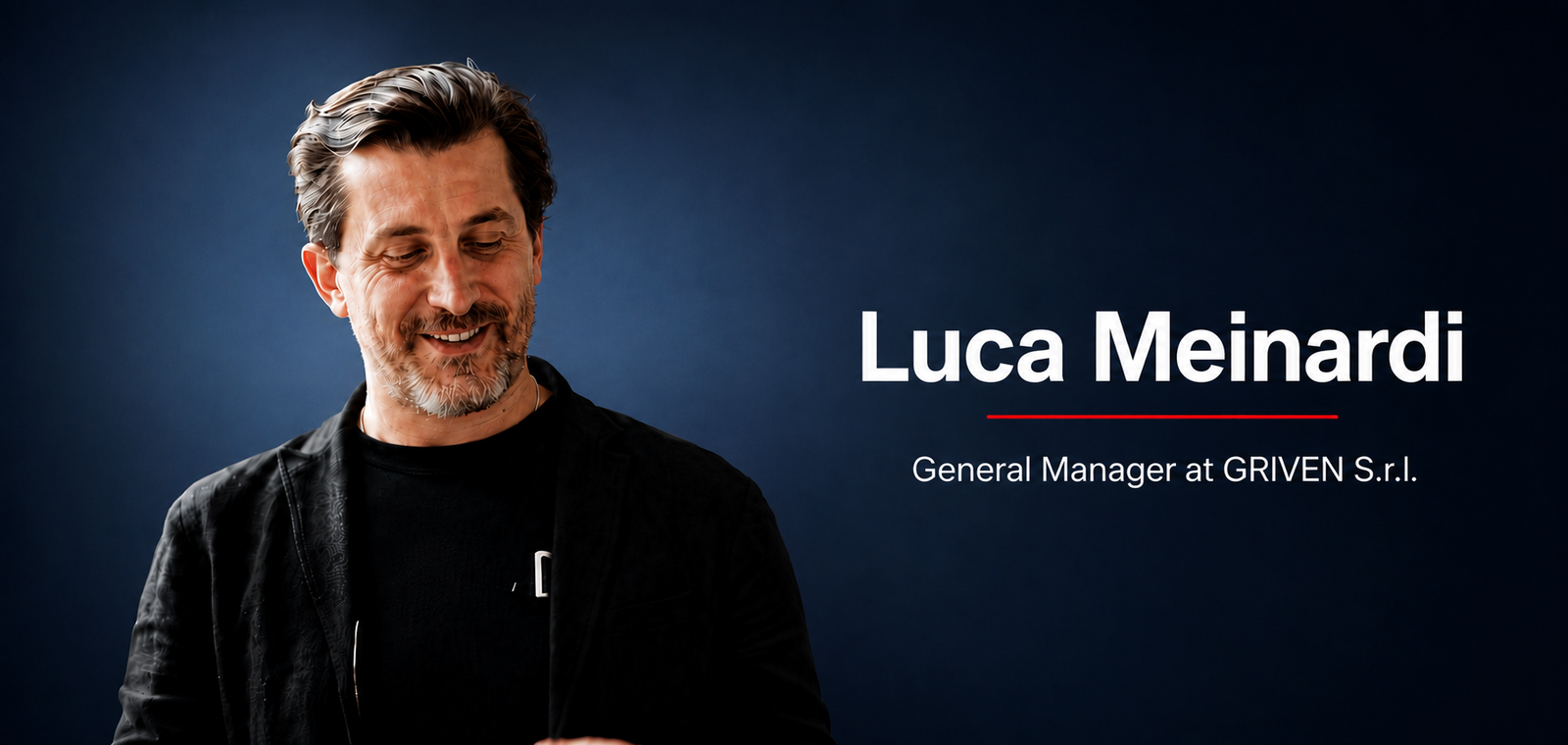
Author: Luca Massimiliano Meinardi, General Manager at GRIVEN S.r.l.
After spending decades working alongside architects, lighting designers, and engineers, I have developed a personal vision of where the lighting industry is heading, together with a deep awareness of the responsibilities that accompany technological progress.
For many years, architectural lighting was often regarded as the final layer of a project—a technical addition introduced once the architecture had already taken shape. Today, that perspective has fundamentally changed. Light is no longer an accessory; it has become an integral design material capable of shaping architecture, influencing perception, supporting sustainability, and enriching the experience of the built environment.
This transformation reflects a broader evolution within the industry. Rapid technological innovation has dramatically expanded what lighting can achieve, while growing environmental awareness and increasingly sophisticated architectural ambitions have raised expectations of how light should perform. The result is a discipline that now demands the same level of strategic thinking as architecture itself. This shift requires lighting designers and manufacturers to work alongside architects from the earliest stages of a project.
Collaboration is becoming the true innovation
As projects become more complex, successful lighting increasingly depends on interdisciplinary collaboration. Architects, lighting designers, engineers, manufacturers, control specialists, and contractors all contribute expertise that must converge around a shared vision.
The most successful projects are rarely those featuring the most advanced technology. Rather, they are those where every participant understands the architectural intent and works towards the same objective.
I think that manufacturers, in particular, have evolved from lighting suppliers into strategic partners, contributing bespoke product solutions, specialised technical expertise, long-term experience, and qualified support throughout every stage of the project lifecycle. This collaborative approach has already become one of the industry’s greatest competitive advantages.
Innovation can help, but…
In the early 2000s, the LED revolution fundamentally transformed our industry, delivering extraordinary gains in efficiency, reliability, and creative freedom. Colour-changing systems, tunable white technologies, sophisticated optical distributions, and intelligent control protocols have become standard tools available to lighting professionals worldwide. Yet as technology matures, technical specifications alone no longer define excellence.
Today’s challenge is not determining what technology can do, but deciding when and, most important, how it should be applied. The quality of a lighting project increasingly depends on the human ability to balance technical performance with architectural sensitivity.
Powerful luminaires have little value without optical precision. Dynamic colour capabilities become irrelevant if they distract from the architecture they are intended to enhance. Intelligent control systems deliver their greatest benefits only when they support meaningful user experiences rather than unnecessary complexity.
Innovation, therefore, is becoming less about adding features and more about refining purpose. It is a process that can only emerge from the collaboration of dedicated professionals, each contributing their unique expertise and perspective to create solutions that are more effective, meaningful, and aligned with the needs of the final project.
Environmental awareness is a must
Architectural lighting today must also address issues such as light pollution, biodiversity, material selection, product longevity, and lifecycle management. The growing adoption of DarkSky principles illustrates this shift in mindset. Designers are increasingly recognising the importance of responsible lighting, which requires conscious management of light in both public and residential environments. Directing illumination precisely where it is needed, while avoiding unnecessary spill light, excessive brightness, and upward light emissions that contribute to skyglow, has become an essential requirement and a fundamental principle of contemporary lighting design.
Similarly, greater attention is being given to wildlife-sensitive lighting in environmentally delicate areas, where appropriate colour temperatures, carefully controlled light emission, and limited operating schedules can significantly reduce ecological impact without compromising safety or visual quality.
Innovation, therefore, is becoming less about adding features and more about refining purpose. This evolution can only be achieved through the collaboration of dedicated teams of professionals who bring together diverse skills and expertise in pursuit of the best possible outcome. To meet these increasingly complex requirements, the lighting industry is actively expanding its capabilities, investing in research and developing innovative solutions that respond to the evolving needs of architecture, people, and the environment. This transformation is being shaped together with lighting professionals, whose expertise, curiosity, and active involvement are essential in defining a more conscious, responsible, and future-oriented approach to light.
True sustainability is no longer measured solely by watts consumed. It is measured by the overall relationship between light, people, and the environment.
Looking Ahead
The future of architectural lighting will undoubtedly be shaped by the continued evolution of artificial intelligence, adaptive control systems, multimedia technologies, and interconnected urban infrastructures. Buildings and cities will become increasingly responsive, adapting intelligently to occupancy patterns, environmental conditions, and energy availability. Yet technology alone will not define the next generation of architectural lighting.
The projects that stand the test of time will be those that successfully balance innovation with restraint, efficiency with emotion, and technological excellence with architectural integrity. Architectural lighting has reached a pivotal moment in its evolution: it is no longer measured solely by brightness, performance, or technical sophistication, but by its ability to enrich spaces, enhance human wellbeing, respect the natural environment, and contribute meaningfully to the architecture it serves.
The future will belong to those who understand that light is not simply a technological output, but a powerful design language — one capable of shaping experiences, strengthening connections between people and places, and creating a more responsible relationship between the built environment and the world around us. The challenge ahead is not only to illuminate more efficiently, but to illuminate with greater awareness, sensitivity, and purpose.