For many years, the Security Operations Center was mainly seen as a place where alerts arrived, analysts
investigated them, and incidents were escalated when something looked serious. That model worked
when threats were slower, infrastructure was simpler, and most attacks followed patterns that humans
could manually trace. But in 2026, that reality has changed.
Today’s SOC is operating in a very different environment. Enterprises are moving across cloud, SaaS,
remote work, IoT, OT, third-party integrations, and now AI-powered business applications. At the same
time, attackers are also becoming faster, more automated, and more creative. Microsoft’s 2025 Digital
Defense Report highlights how AI is being used by both defenders and threat actors, creating new
challenges for security teams that already face too much noise, too many tools, and too little time.
This is why AI-driven SOC transformation is no longer just a technology discussion. It is a leadership
discussion.
The real question is not whether AI will enter the SOC. It already has. The real question is whether
organizations will use AI in a controlled, governed, and measurable way, or whether they will simply add
another layer of complexity to an already overloaded security function.
A modern SOC cannot survive by only hiring more analysts or buying more dashboards. The volume of
data is too large, the speed of attacks is too high, and the business expectation is too demanding. Leaders
want faster detection, better response, reduced business impact, stronger compliance, and clearer visibility
into cyber risk. AI can support all of this, but only if it is implemented with the right operating model.
One of the biggest opportunities for AI in the SOC is reducing alert fatigue. Most SOC teams do not
suffer because they lack alerts. They suffer because they have too many alerts, many of which are
duplicates, false positives, or low-priority signals. Analysts spend valuable time moving between tools,
checking logs, validating indicators, and writing repetitive investigation notes. AI can help by correlating
data across SIEM, EDR, NDR, identity systems, threat intelligence, and cloud platforms. It can
summarize incidents, identify patterns, recommend next steps, and help analysts focus on what truly
matters.
But AI should not be seen as a replacement for analysts. That is one of the biggest myths in cybersecurity
today. AI can accelerate investigation, but it cannot fully understand business context, regulatory
exposure, executive risk appetite, or the political sensitivity of a cyber incident. A payment system alert, a
healthcare data exposure, and a government identity system compromise may all look technical on the
surface, but each has a very different business meaning. Human judgment remains essential.
The best SOCs of the future will not be fully automated. They will be human-led and AI-assisted.
Another important area is response automation. Traditional SOCs often stop at detection and escalation. A
ticket is created, an email is sent, or an analyst contacts another team. This creates delays, especially
when incidents happen outside business hours. AI-driven SOCs can move closer to real-time response by
recommending or initiating actions such as isolating endpoints, disabling suspicious accounts, blocking
malicious domains, enriching indicators, or triggering playbooks through SOAR platforms.
However, automation must be carefully governed. Not every action should be fully automatic. Some
responses can disrupt business operations if executed without validation. For example, disabling a
privileged account, isolating a production server, or blocking a business-critical integration can create
operational damage if the decision is wrong. This is why organizations need clear response tiers: low-risk
actions can be automated, medium-risk actions can require analyst approval, and high-risk actions should
involve senior security and business stakeholders.
AI also changes the way SOC performance should be measured. Traditional metrics such as the number
of alerts closed or the number of tickets handled are no longer enough. Leaders should measure outcomes:
mean time to detect, mean time to respond, reduction in false positives, percentage of incidents enriched
automatically, quality of analyst decisions, containment speed, and business impact reduction. IBM’s
2025 Cost of a Data Breach Report noted that faster breach containment, supported by AI-powered
defenses, contributed to lower average global breach costs, highlighting the importance of speed and
maturity.
But there is another side of the story. AI can also create new risk inside the SOC. If security teams use AI
tools without governance, they may expose sensitive logs, personal data, credentials, source code, or
incident details to platforms that are not approved for that purpose. Shadow AI is becoming a serious
concern for enterprises. A SOC cannot govern the organization’s AI risk if its own AI usage is
unmanaged.
This is where AI governance becomes part of SOC transformation. Every AI use case in the SOC should
have clear ownership, access control, logging, testing, validation, and review. Organizations should know
which AI tools are approved, what data they can process, how outputs are validated, and who is
accountable when AI recommendations influence incident decisions. NIST’s AI Risk Management
Framework provides a useful structure through its Govern, Map, Measure, and Manage functions, helping
organizations move from AI enthusiasm to responsible AI operations.
Another key point is that AI-driven SOC transformation must align with Zero Trust. A modern SOC
should not assume that activity is safe just because it comes from inside the network or from a known
user. Identity, device posture, application behavior, session context, and data access patterns must all be
continuously evaluated. CISA’s Zero Trust Maturity Model emphasizes continuous monitoring and
validation of assets, identities, networks, applications, and data, which directly supports the future SOC
model.
The SOC of the future will also need new skills. Analysts will still need technical knowledge, but they
will also need to understand AI outputs, ask better questions, validate recommendations, tune models,
identify hallucinations, and recognize when automation is making a wrong assumption. SOC managers
will need to understand AI governance, model risk, privacy, compliance, and operational resilience.
CISOs will need to explain AI-driven SOC investment in business language, not only technical language.
This is where many organizations make a mistake. They treat AI as a tool purchase instead of a
transformation program. Buying an AI-enabled SIEM, EDR, or SOAR platform does not automatically
create an AI-driven SOC. Transformation requires process redesign, data quality improvement,
integration between tools, analyst training, governance, executive sponsorship, and continuous
measurement.
In practical terms, organizations should start small. They do not need to automate everything on day one.
A good first step is to identify repetitive use cases: phishing investigation, malware triage, suspicious
login analysis, endpoint enrichment, threat intelligence summarization, or incident report generation.
These use cases are practical, measurable, and easier to control. Once trust is built, organizations can
expand toward more advanced use cases such as predictive risk scoring, autonomous containment, and
AI-assisted threat hunting.
The future SOC will not be judged by how much AI it uses. It will be judged by how effectively it
reduces risk.
AI has the potential to move SOCs from reactive alert handling to intelligent cyber defense. It can help
teams detect faster, respond smarter, reduce analyst burnout, and communicate risk more clearly to
leadership. But AI must be implemented with governance, human oversight, and a strong understanding
of business context.
For cybersecurity leaders, the message is simple: AI-driven SOC transformation is not about replacing
people. It is about giving people better intelligence, better speed, and better decision support.
The organizations that succeed will be those that combine automation with accountability, intelligence
with governance, and innovation with resilience. That is the real future of the SOC.
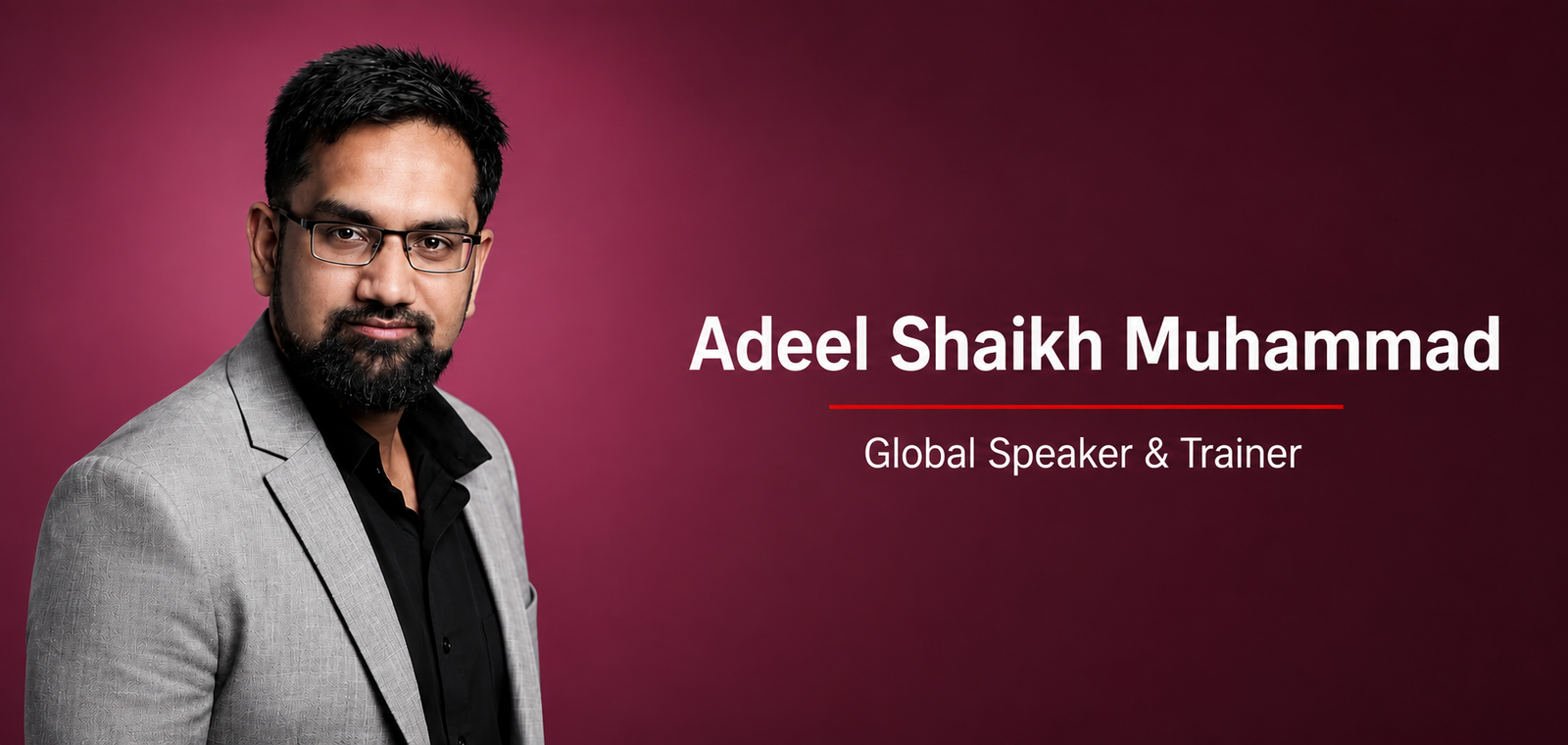
Author: Adeel Shaikh Muhammad
Website: https://www.adeel.solutions
SpeakerHub: https://www.speakerhub.com/speaker/adeel-shaikh-muhammad